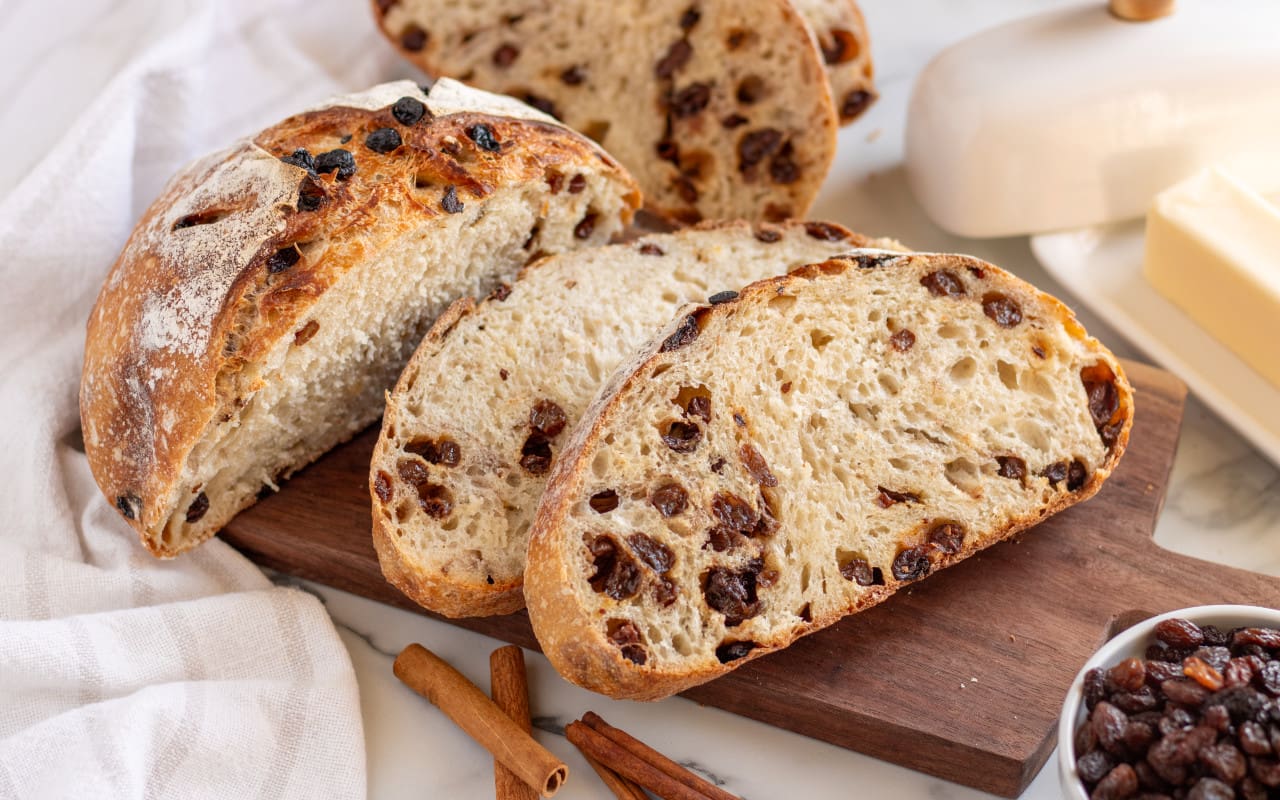
Cinnamon Raisin Sourdough
This Cinnamon Raisin Sourdough Bread recipe has the perfect mix of sweet and warm flavors! One bite and you will feel like you're back at grandma's house. Serve warm or toasted with a butter spread and a hot cup of coffee!
Servings 12 slices
Baking Temp 475°F
Calories 220kcal
Ingredients
- 100 g Active sourdough starter
- 500 g Bread flour
- 325 g Water
- 10 g Salt
- 3 g Cinnamon
- 150 g Raisins
Instructions
Before you start
- Soak the raisins in hot water for 10–15 minutes. Drain very well and pat dry. Use an active, bubbly starter at peak activity.
Mix and Autolyse
- Stir the starter and water together. Add the flour and mix until no dry flour remains. Cover and rest for 30–45 minutes.
Add Salt
- Sprinkle the salt over the dough and work it in thoroughly by pinching and folding the dough until evenly incorporated.
Build Dough Strength
- During the first 2–3 hours of bulk fermentation, perform a set of stretch-and-folds every 30–45 minutes. Keep the dough covered between folds.
Add Cinnamon and Raisins
- After the dough has developed some strength, gently stretch the dough on a lightly wet surface. Sprinkle the cinnamon and drained raisins over the dough, then fold it up to enclose the additions. Gently fold once or twice more to distribute them without tearing the dough.
Finish Bulk Fermentation
- Let the dough continue fermenting until it has increased by roughly 50–75% in volume and looks puffy with bubbles along the sides or surface. Don't rely only on the clock—the dough's appearance matters most.
Shape
- Turn the dough onto a lightly floured surface. Shape into a boule or batard, creating good surface tension. Place seam-side up in a floured proofing basket.
Cold Proof
- Cover and refrigerate for 8–12 hours.
Bake
- Preheat a Dutch oven and oven to 475°F (246°C). Score the chilled loaf and bake covered for 20 minutes. Remove the lid and bake another 20–25 minutes, until deeply golden brown.
Cool
- Let the loaf cool completely—ideally 1–2 hours—before slicing. This helps the crumb finish setting.
Notes
Troubleshooting for a Dense or Wet Loaf:
• Very wet dough: Make sure the raisins are thoroughly drained and dried. Hold back 10–20 g of the water during mixing and add it only if the dough can handle it.
• Dense loaf: Make sure your starter is active and bubbly before mixing. Avoid ending bulk fermentation too early; look for a noticeably puffy dough with bubbles and a 50–75% increase in volume.
• Cinnamon: Keeping the cinnamon at 3 g and adding it after some gluten development helps minimize its impact on fermentation and dough strength.
• Handling: Raisins can tear gluten if worked in aggressively. Add them gently after the dough has developed strength.
EatWheat.org provides nutrition information for recipes as a courtesy and is an estimate only. This information comes from online calculators and should be considered an estimate, not a guarantee. Varying factors like brand types, natural variations in produce, and ingredient preparation can change the nutritional information in any recipe. For absolute accuracy, calculate your own nutritional information.
Nutrition
Serving: 91g | Calories: 220kcal | Carbohydrates: 44g | Protein: 9g | Fat: 1.5g | Sodium: 330mg | Potassium: 220mg | Fiber: 4g | Sugar: 8g | Calcium: 20mg | Iron: 0.8mg